London’s Top Choice: Award-Winning Clinic for Exceptional Eye Care

Glaucoma Treatment Pathway in London
From eye drops to surgery, explained by Mr Vik Sharma, Lead Glaucoma Surgeon at Royal Free London NHS Trust.
Who is the lead glaucoma surgeon at Royal Free London NHS Trust?
Mr Vik Sharma, Lead Glaucoma Surgeon at Royal Free London NHS Trust and Medical Director of the London Ophthalmology Centre.
I'm Mr Vik Sharma, and I hold that role at Royal Free London NHS Trust, alongside my private practice at the London Ophthalmology Centre, where I am Medical Director. I see patients on Harley Street and operate at our surgery centre in Fitzroy Square, central London. It means I manage the full spectrum of glaucoma care, from early diagnosis through to the most complex surgical cases, in both an NHS teaching hospital and a private consultant-led setting.
That NHS role matters for one reason: it's the same standard of judgement I bring to every patient I see privately. The treatment pathway below isn't a marketing simplification. It's how I think through a patient's options, in order.
And the most important part of that pathway is you: the type and stage of your glaucoma, the condition of your optic nerve, and your own wishes about treatment.
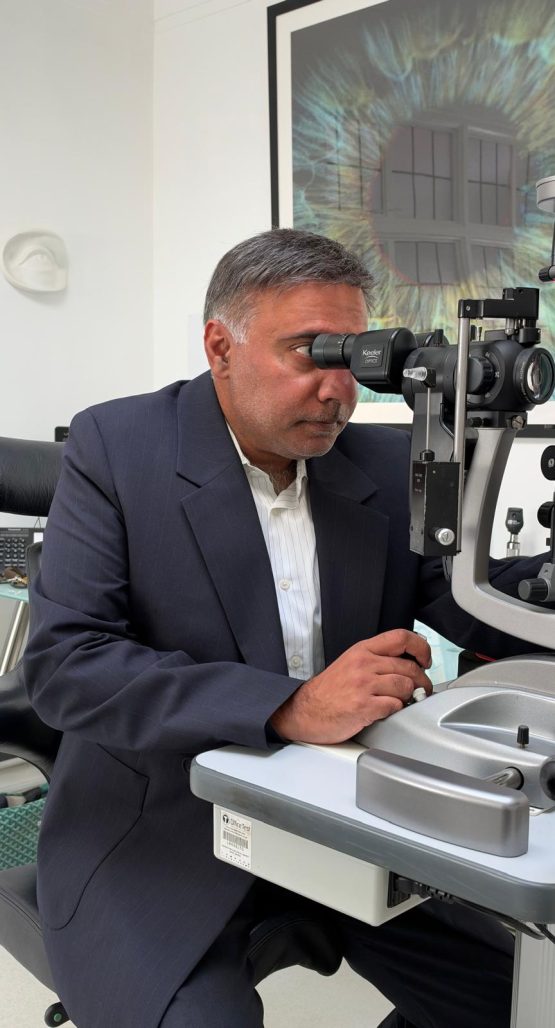
Consultant-led glaucoma care at LondonOC.
The right glaucoma treatment, at the right time, in the right order.
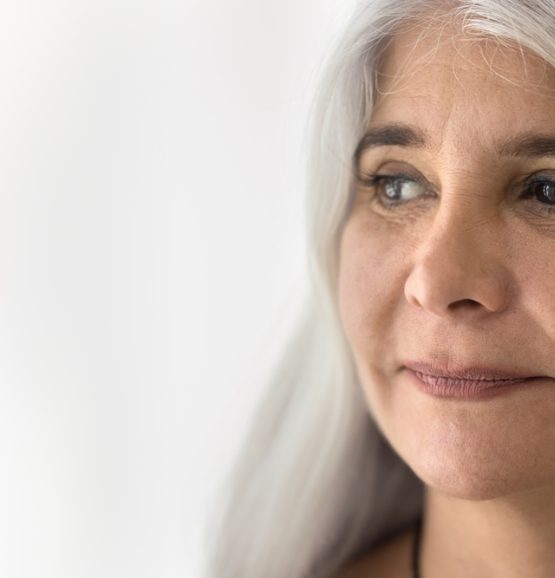
Your glaucoma treatment pathway
From SLT laser and eye drops, to minimally invasive glaucoma surgery (MIGS), to traditional glaucoma surgery.
Glaucoma treatment works in stages. Each stage carries its own balance of effectiveness and risk, and the goal is always to protect your vision using the least invasive approach that will work for you. Here is how I take patients through each step.
Step 1: What is the first step in treating glaucoma?
For most patients, treatment starts with one of two things: eye drops, or SLT laser (Selective Laser Trabeculoplasty).
SLT laser is the safest treatment I offer. It has fewer side effects than daily eye drops, and most patients have better control of their eye pressure after SLT than with drops alone. It is quick, low risk, and there is no daily routine to keep up. SLT is now a first-line treatment, and in most cases it should be considered before eye drops are introduced. Around 75% of patients remain drop-free after SLT.
If drops alone aren't enough, or their side effects become difficult to tolerate, SLT is usually the next conversation, not surgery. Exactly when we move on depends on the condition of your optic nerve and what you want from your treatment.
Step 2: What happens if eye drops and SLT aren't controlling the pressure?
This is where minimally invasive glaucoma surgery, or MIGS, comes in. MIGS isn't one procedure. It's a category of different devices, and I personally perform all four of the main ones. In order of increasing effectiveness, and increasing risk, they are:
- Hydrus Microstent: an 8mm metal scaffold that opens up the eye's natural drainage meshwork.
- OMNI Surgical System: a small catheter used to widen the drainage meshwork and strip away any resistance to fluid draining out of the eye.
- Xen Gel Stent: a 6mm soft microtube that creates a new drainage pathway out of the eye.
- PreserFlo MicroShunt: an 8mm microshunt made of a soft synthetic material that creates a new drainage area out of the eye.
Which device is right for you depends on how much pressure reduction you need, the anatomy of your eye, your stage of glaucoma, and your own wishes. I don't default to whichever device I happen to have. Many clinics only offer one or two of these devices, which means the recommendation is shaped by what they have, not necessarily by what's right for you.
Step 3: What if MIGS isn't enough?
For advanced or more complex cases, the next stage is traditional glaucoma surgery: trabeculectomy, tube surgery or diode laser treatment.
Trabeculectomy. A trabeculectomy (trab) is the gold standard glaucoma operation. It has been performed for over 70 years, and we have refined it with modern tools to make it the most effective way to lower eye pressure. It creates a small opening in the wall of the eye so that fluid can drain more freely under the thin outer layer of the eye. It does involve some incisions and stitches, and recovery can take a week or more, but it is very effective at lowering eye pressure. Risks include infection and the pressure becoming too low, which can cause damage to the retina.
Tube surgery. Tube surgery uses a larger tube attached to a plate, which acts as a reservoir for fluid to drain into. Surgery takes 30 to 60 minutes and recovery is usually 1 to 2 weeks.
Diode laser. Diode laser lowers eye pressure by treating the cells that produce fluid inside the eye. Because it causes inflammation it can be painful, so I usually reserve traditional diode laser for advanced cases.
Why does the order of treatment matter?
Glaucoma treatment isn't about jumping straight to the most powerful option available. Escalating too early carries unnecessary risk; waiting too long risks irreversible vision loss. Getting that timing right is the core skill in glaucoma care.
Common questions about glaucoma treatment
These are the questions patients ask me most often, and I'd rather answer them plainly here than leave them to a consultation.
Does glaucoma treatment hurt?
No. No surgery in my hands should hurt. I need my patients to be still and comfortable, so I make sure surgery is painless at all times.
How long is recovery after MIGS and after traditional glaucoma surgery?
Recovery after MIGS is usually 1 to 2 days. After traditional glaucoma surgery, such as a trabeculectomy or tube surgery, it is usually 1 to 2 weeks.
Will I still need eye drops after glaucoma surgery?
Possibly. It depends on the condition of your optic nerve and how much your eye pressure is lowered by surgery.
What does glaucoma surgery cost privately, and what is available on the NHS?
Our all-inclusive glaucoma surgery packages start from £6,500. Most of these devices are now available on the NHS, but exactly which ones depends on your local surgeon and hospital. See our fee guide.
How soon can I drive, work and exercise again?
That depends on your eye, which procedure you have and how your recovery goes. I guide every patient personally through this period, and once the eye is comfortable and your vision is stable, you can drive again.
Booking a glaucoma consultation
If you've been diagnosed with glaucoma, or your eye pressure has been flagged at a routine check, I see patients at the London Ophthalmology Centre on Harley Street. A first consultation covers a full pressure and optic nerve assessment, and you'll leave knowing which stage of this pathway you're at.
You may also want to read about our glaucoma assessment and diagnostics, or, if you're managing cataracts as well, our cataract surgery page.
EVERY DETAIL TAKEN CARE OF.
Your Journey.
Perfectly Planned.
From arranging your hotel and coordinating your travel to providing complimentary transport on the day of surgery, our dedicated Patient Concierge Service ensures your treatment journey is seamless from beginning to end.
Every aspect of your care is personally overseen by your Consultant Surgeon and team.
Why choose LondonOC?
Choosing London Ophthalmology Centre means prioritising your eye health with a team dedicated to excellence and innovation.
Our clinic is renowned for its advanced techniques and state-of-the-art technology, ensuring you receive the best possible care. Our experienced ophthalmologists specialise in a wide range of services, including cataract surgery, glaucoma management, and vision correction procedures, tailored to meet your unique needs.
At LondonOC, we believe in a patient-centered approach. From your first consultation to post-operative care, we take the time to listen to your concerns and educate you about your options, ensuring you feel confident in your treatment journey.
Our commitment to quality care is reflected in our impressive patient satisfaction rates, with 98% of patients reporting high levels of satisfaction with their procedures.
We also pride ourselves on creating a welcoming and comfortable environment, where every patient is treated with compassion and respect. With flexible appointment options and a dedicated support team, we strive to make your experience as smooth as possible.
When you choose London Ophthalmology Centre, you’re not just choosing a clinic; you’re choosing a partner in your eye health, committed to helping you achieve and maintain optimal vision.
Reach out today to schedule your consultation and take the first step toward better eye health with our expert team.
A glaucoma patient's experience
"My mother would like to thank Mr. Sharma for the marvellous work he carried out for her Xen tube operation on her right eye. She told us that she didn't feel anything and it was done so quickly that she was very glad this procedure was carried out. There is no doubt that he had prevented her from the deterioration of her eye contributing to her going blind due to her high intraocular pressure with Glaucoma... She told us that things are so much clearer and sharper in her right eye."
Procedure: Xen Gel Stent
Shared by the patient's family
Get in touch with LondonOC
Our prestigious private eye clinic is based in the heart of London's world-famous Harley Street. With in-house diagnostic and treatment facilities, you won't need to look any further.
Outpatients (Clinic Appointments)
99 Harley Street, London, W1G 6AQ
Ophthalmology Surgery Centre
13-14 Fitzroy Square, London W1T 6AH
Email: info@londonoc.co.uk
Phone: 020 7000 3193
Phone: 0800 7569993
We are open from Monday - Friday 9am-7pm
We will contact you directly within the next 1-2 business days. For any urgent enquiries, please call us.